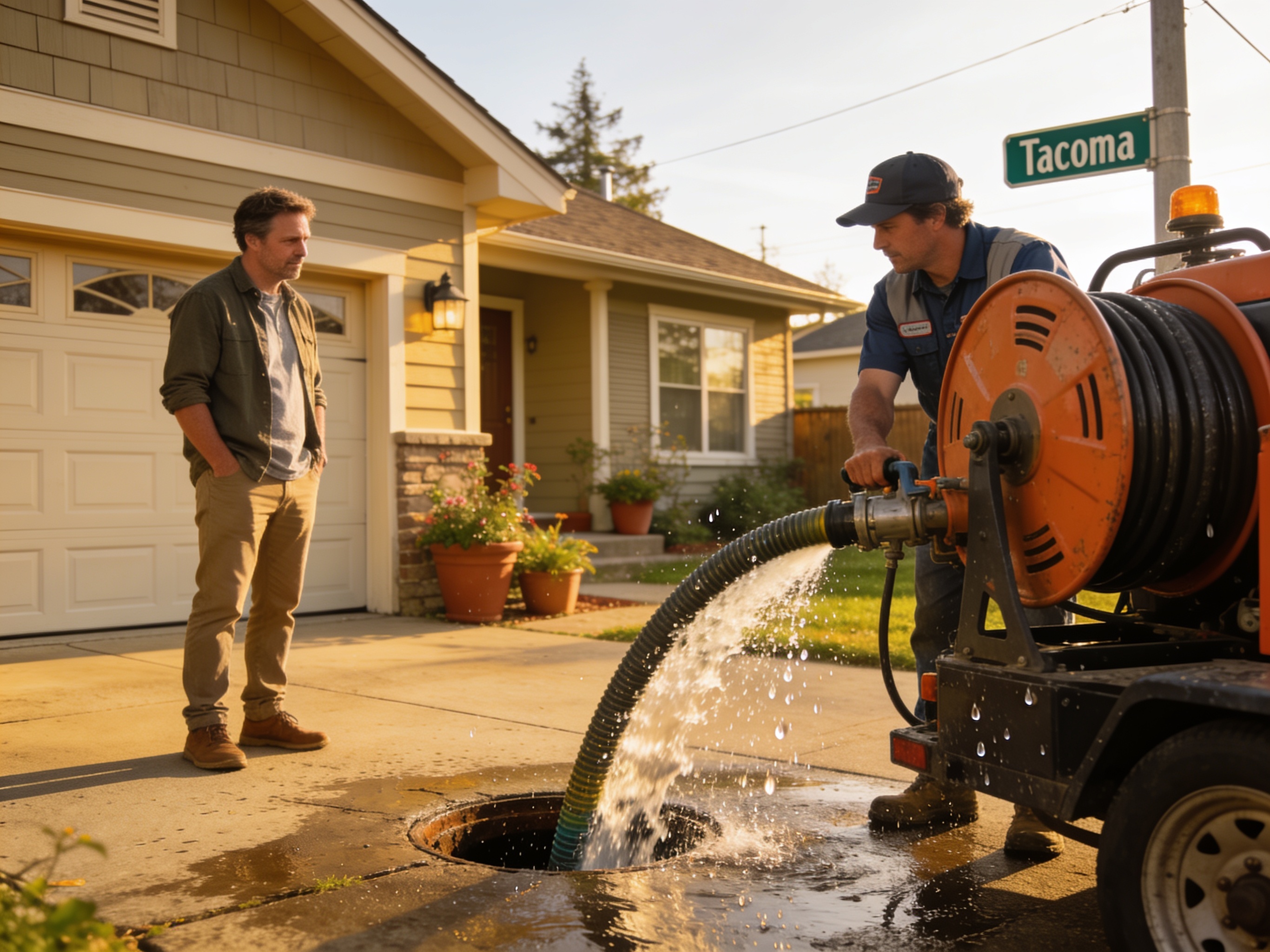
Hoodsport sits along Hood Canal with older waterfront and hillside homes that often have aging clay or cast-iron lines running under narrow driveways and through dense salal and cedar roots. Wet winters bring heavy runoff that pushes sediment and grease into those pipes, and the mild marine climate keeps the ground saturated much of the year, making hydro jetting the practical way to clear blockages without digging up steep lots. Tacoma Hydro Jetting sends trucks from 403 Broadway to handle these jobs during posted hours.
Access in Hoodsport frequently means working around Highway 101 traffic and tight lakefront parcels where septic tanks sit close to the main line. Crews stage equipment on the shoulder or in driveways off N Hoodsport Road, then run the jetter hose from the cleanout to scour roots and scale that build up faster here than in drier neighborhoods. The same wet conditions that help tree roots thrive also make post-job camera inspections essential so homeowners see the line is truly clear before the crew leaves.
Because many Hoodsport properties predate modern sewer standards, small-diameter laterals and offset joints are common. Hydro jetting at 4,000 psi breaks apart the grease mats and root masses that accumulate during the long rainy season without the risk of pushing debris into the main. Homeowners along the canal notice fewer slow drains after scheduled service, especially when fall leaves and winter rain increase flow through the system.
Around Hoodsport
We regularly work near:
- 📍Hoodsport Marina
- 📍Highway 101
- 📍Hoodsport Trail State Park
- 📍Lake Cushman Road
Sewer Hydro Jetting in Hoodsport — Local Notes
- •Hoodsport homes along the canal often have 3- or 4-inch clay laterals laid decades ago; high-pressure jetting clears roots without excavation on narrow shoreline lots.
- •Heavy winter rain saturates the ground and drives sediment into low spots near Highway 101, so jetting routes are planned to flush debris toward the main before it settles again.
- •Steep driveways off N Hoodsport Road limit equipment placement, requiring longer hose runs and careful staging to reach cleanouts without blocking lake access.