2026-09-15 ·
Spring Cleaning for Pipes: Why Tacoma Chooses Hydro Jetting
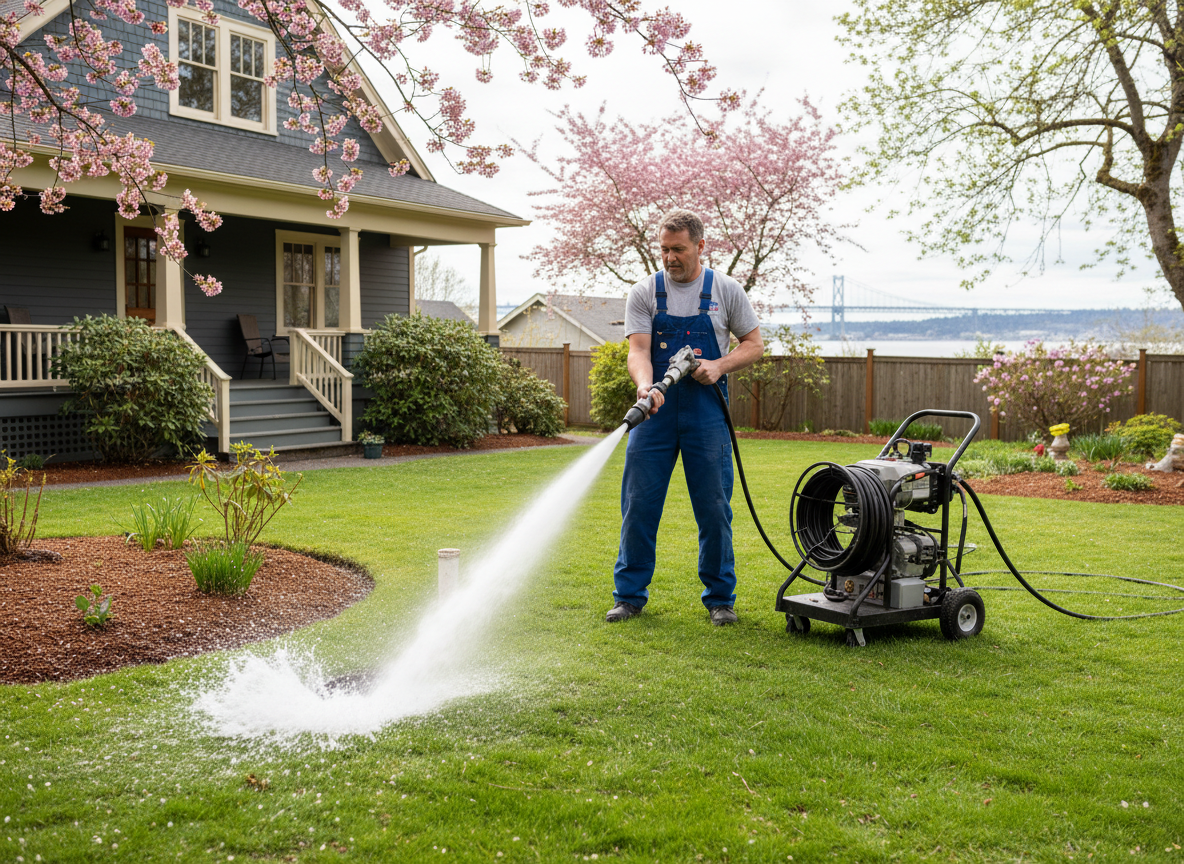
Tacoma homeowners schedule hydro jetting each spring because the region's mild marine climate delivers heavy winter rains that push grease, silt, and fine roots deep into sewer lines, especially in homes built before 1970 in the North End, Hilltop, and Stadium District.
Tacoma's Winter Buildup and Spring Pipe Needs
Pierce County's cool, wet winters send steady water through older clay and cast-iron pipes that run beneath streets from Downtown Tacoma to the Eastside. This constant flow carries cooking grease from University Place kitchens and fine sediment from Point Defiance Park slopes, allowing layers to harden along pipe walls. By March, many lines in the Proctor District and West End show reduced capacity that only high-pressure water can strip away. Homeowners notice slower drains after the first warm spell because spring temperatures loosen winter grease without flushing it out. Hydro jetting at 4,000–5,000 psi cuts through these deposits in a single pass, restoring the original pipe diameter without chemicals that can harm Tacoma's wastewater treatment system.
Why Hydro Jetting Outperforms Snaking on Local Lines
Traditional cable machines break through a clog but leave residue on pipe walls, allowing the same blockage to reform within weeks in Tacoma's clay-heavy soil. Hydro jetting uses specialized nozzles that rotate 360 degrees, scouring every inch while the water pressure pushes debris all the way to the main. In neighborhoods like South End and Hilltop, where many sewer lines still measure 4 inches or less, this full cleaning prevents the frequent callbacks that occur after simple snaking. The method also reaches branch lines from laundry rooms and bathrooms that cable tools often miss. Residents near the Tacoma Dome and Chihuly Bridge of Glass report fewer backups after switching to annual hydro jetting because the process removes the organic film that roots seek out.
Timing Spring Service Around Tacoma Weather
Late March through early May offers the best window before summer events increase water use at venues near Union Station and the Museum of Glass. Scheduling after the last heavy rains but before irrigation systems turn on lets crews work without fighting new inflow. Lines serving Federal Way and Lakewood commuters often need attention first because those routes carry extra volume from daily travel. A typical residential job on a 40–60 foot main line takes 90–120 minutes once the cleanout is located. Crews start at the 403 Broadway address and move outward to cover North End and West End calls the same week.
Signs Your Tacoma Home Needs Spring Hydro Jetting
Watch for gurgling at floor drains after a rain, multiple slow fixtures on the same floor, or faint sewer odor near the foundation. These clues appear first in older stock along the Eastside and around the Stadium District. A quick camera inspection confirms whether roots from nearby street trees have entered joints, a common issue in Pierce County soil that shifts slightly each freeze-thaw cycle. Addressing the line now prevents emergency calls during summer festivals when crews are busiest.
For ongoing protection, many Tacoma households add hydro jetting to their yearly schedule. Readers also find value in how same-day sewer hydro jetting keeps Tacoma neighborhoods flowing smoothly and 7 signs your Tacoma home needs emergency sewer hydro jetting. Tacoma Hydro Jetting serves these areas Monday through Friday 8am–6pm and Saturday 9am–2pm from its base at 403 Broadway, Tacoma, WA 98402.